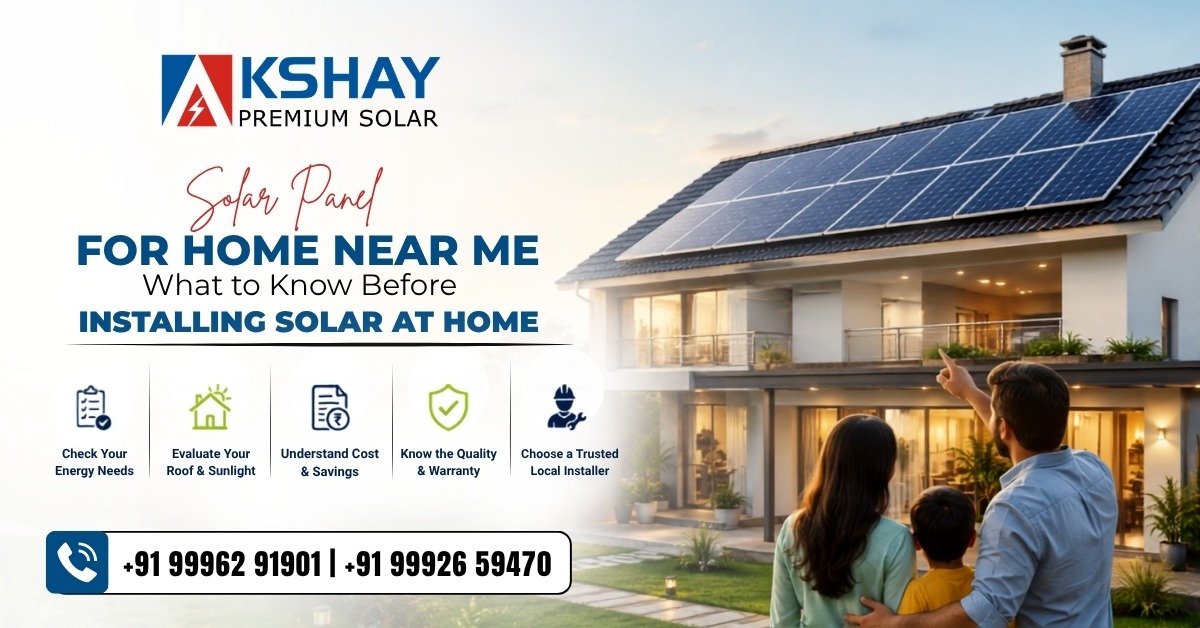
If you are searching for solar panel for home near me - you are likely looking for a reliable solar installer who can recommend the right solution for your home. With increasing electricity costs and growing interest in clean energy - more homeowners are considering rooftop solar as a practical long term option
Installing solar panels is a long term investment - so it is important to understand a few key things before getting started. From your home's electricity consumption and rooftop space to the type of solar system and the quality of the installer - proper research can help you make a better decision.
Why choose solar panels for your home?
Solar panels convert sunlight to electricity which can be used for your household requirements. Making electricity - can cut reliance on traditional electricity generation and maximize rooftop space use
Some key benefits of home solar include-
- Potential reduction in electricity bills
- Lower dependence on grid electricity
- Clean and renewable energy generation
- Better use of unused rooftop space
- Potential long term energy savings
- Relatively low maintenance after installation
The actual savings from a solar system can vary from one home to another. Factors such as electricity consumption, system capacity, sunlight availability, electricity rates and applicable local policies can all affect the overall benefits
What should you check before installing solar?
Before installing solar panels - it is important to determine whether your home is suitable for a solar installation. A professional installer can assess your rooftop and electricity requirements and recommend a suitable system
1. Check your electricity consumption
Start by reviewing your recent electricity bills. This will give you an idea of how much electricity your household uses on average each month
If your home has high electricity consumption - you may need a larger solar system. A home with lower energy requirements may be able to meet its needs with a smaller system
Understanding your current electricity usage can help an installer determine an appropriate system capacity instead of simply recommending a standard-size installation
2. Assess your rooftop space
Solar panels need sufficient rooftop space for proper installation. The size, structure, direction and layout of your roof can all influence the solar system design
You should also consider shading. Trees, nearby buildings, water tanks and other structures can block sunlight and affect solar energy generation
A professional rooftop assessment can help determine where panels should be placed and how much usable space is actually available
3. Understand the different solar system options
Homeowners can choose from different types of solar systems depending on their energy requirements, budget and backup needs
On grid solar - An on grid system remains connected to the electricity grid. It can be a suitable option for homeowners who want to generate solar power while maintaining their existing grid connection
Off grid solar - Off grid means that it is not connected to the power grid and typically is battery storage based. Can be helpful in areas without electricity or if there is a power outage
Hybrid solar - Hybrid system is a combination of solar, battery storage and grid. It can be considered by homeowners who want solar power along with an additional backup option
It is important to understand these options so you can select the system that best fits your home's needs
What is the number of solar panels your home requires?
There is no set amount of solar panels for every house. The required system size depends on your electricity consumption and the amount of energy you want the system to generate
A solar installer may consider factors such as-- Average monthly electricity consumption
- Available rooftop area
- Sunlight and shading conditions
- Solar panel efficiency
- Roof direction and layout
- Future electricity requirements
- Desired energy generation
A proper assessment can help you avoid installing a system that is too small for your needs or unnecessarily large for your home
How to choose a solar installer near you
When you search for solar panel for home near me - you may find several solar companies operating in your area. However choosing an installer based only on the lowest price is not always the best approach
Before selecting a company, consider-
- Experience with residential solar installations
- Quality of solar panels and inverters
- Installation standards and workmanship
- Warranty information
- After-sales service
- Transparent pricing
- Customer reviews and feedback
- Documentation and installation support
Choosing a local installer can also make communication, site visits, maintenance and future service more convenient
What components are included in a solar installation?
A home solar system includes more than just solar panels. Depending on the type of system - the complete setup may include-
- Solar panels
- Solar inverter
- Mounting structure
- Electrical cables
- Safety and protection equipment
- Monitoring system
- Battery storage if required
When requesting a quotation - ask the installer for complete equipment details. This makes it easier to compare different proposals and understand exactly what is included in the installation cost
Don't choose a solar company based on price alone
The installation cost is an important factor - but it should not be the only consideration. A lower priced installation may involve differences in equipment quality, workmanship, warranty coverage or after sales support
When comparing solar companies - look at the complete package rather than focusing only on the initial price. Consider the quality of the equipment, installation standards, warranty terms, expected performance and customer support
A clear and detailed quotation can also help prevent unexpected costs later
Is installing solar at home worth it?
For many homeowners - solar can be a useful long term energy solution. However the financial benefits and savings can vary depending on individual circumstances
Factors that can influence the benefits of solar include-
- Monthly electricity consumption
- Available sunlight
- Solar system capacity
- Electricity rates
- Installation cost
- Applicable government schemes or incentives
A professional solar assessment can give you a better understanding of whether solar is suitable for your home and what type of system may be appropriate
Questions to ask before installing solar
Before finalizing a solar installer - ask a few important questions-
- Which solar system is suitable for my home?
- What system capacity do I need?
- Which panels and inverter will be installed?
- What will be the needed rooftop area?
- What is the length of the installation?
- What warranty is provided?
- What kind of service is provided after the sale?
- What is included in the quotation?
- Are there any additional installation or service charges?
With answers to these questions - you'll find it easier to compare different installers and choose the one that fits your home best
Planning your home solar setup
If you are searching for solar panel for home near me, finding a nearby installer is only the first step. You should also understand your electricity requirements, assess your rooftop, compare different solar system options and check the quality and reliability of the installation company
With proper planning and professional installation - a residential solar system can help you generate clean energy and reduce your dependence on conventional grid electricity
Before making your final decision, get a professional rooftop assessment and compare detailed quotations based on your home's actual electricity requirements. Choosing the right system and a reliable installer can make your transition to solar a more practical and beneficial long term investment